





Protect drivers from tripped fuses and peak tariff spikes
Monta watches total household load and holds charging below both the fuse limit and the driver’s peak threshold – automatically, without interrupting the charge.
Two problems. One meter integration.
Both address separate issues caused by unmanaged EV charging alongside other household loads – and both run on the same whole-home measurement as SolarCharge, so one hardware connection serves all three.
Fuse Protection
Run a charging session alongside a dishwasher, oven or heat pump and the main fuse can trip, cutting power to the whole house. Monta measures total household current and slows charging before the limit is reached.
Peak protection
Under a capacity tariff, part of a household’s monthly bill is set by its single highest consumption peak. One unmanaged session at the wrong moment sets the cost for the whole month. Monta holds total load below the driver’s threshold.
Fast enough to matter, and honest about the limits.
1–10 s
Meter acquires the reading
0–60 s
Meter sending interval — device-controlled
<1 s
Monta processes and decides
<1 s
OCPP command reaches the charger
1–5 s
Charger and vehicle ramp down
From connected vehicle to smarter charging
No hardware to install. A vehicle connects once and the data works across charging, billing, and reporting.
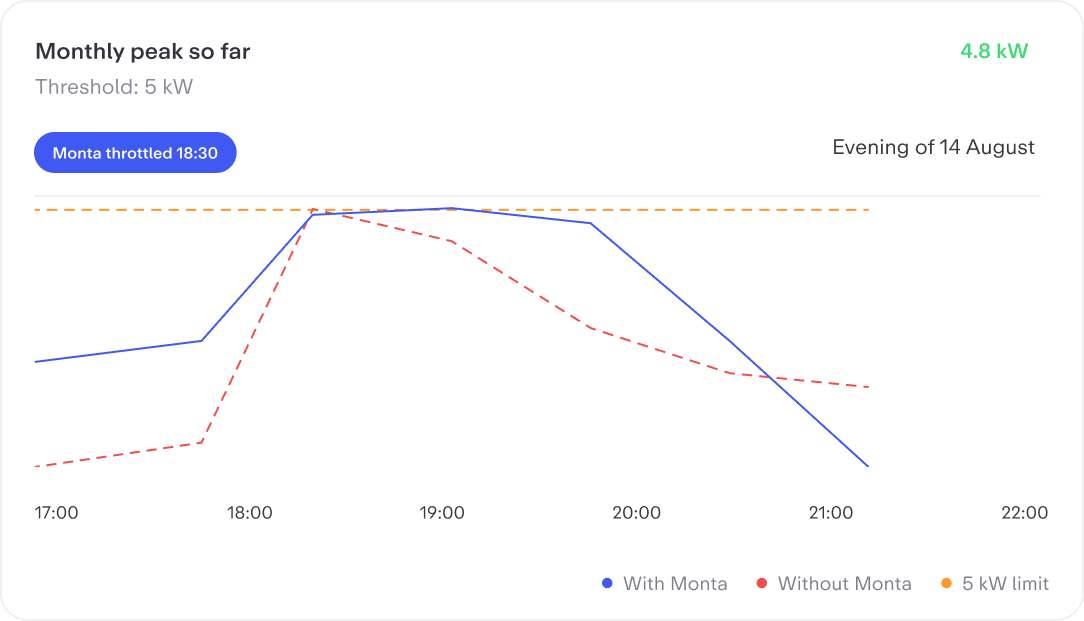

Set the threshold
Driver sets their peak demand threshold in the Monta app (e.g. 5 kW monthly peak limit)

Load is tracked live
Monta monitors total household load through the connected whole-home meter reader

Charging throttles automatically
EV charging is dynamically throttled whenever total load approaches the threshold

Ready-by still holds
The driver’s “ready by” time and target charge level still hold. Monta optimises around the goal, not against it
How it behaves
Charging slows automatically and the driver is notified — infrequently, and only when Monta has acted. The limit covers total current across every charge point in the home, not each one separately. The charger always receives the lowest of the solar, fuse, and peak limits, so the features cannot work against each other.
Protect your drivers home today
What your drivers need
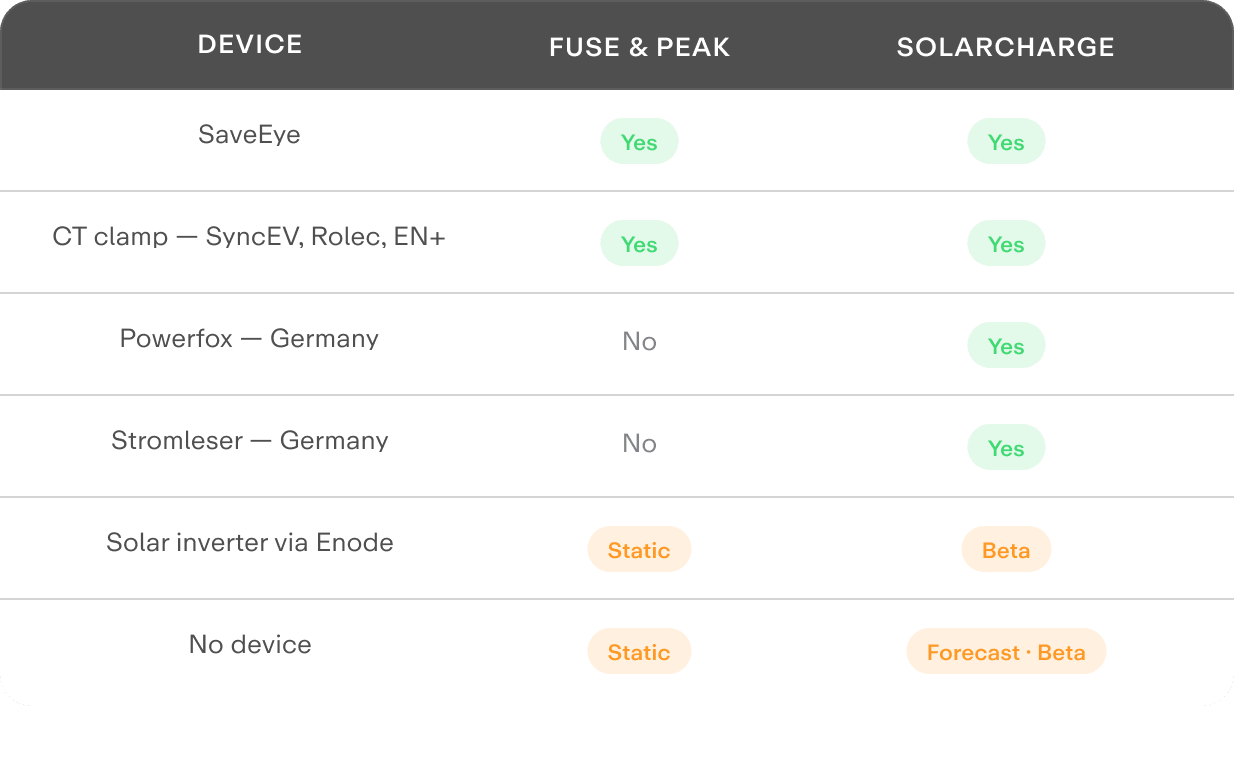
One meter connection serves fuse protection, peak protection, and SolarCharge — but not every device supports all three. Check the table before committing.
CT clamps fit at the main supply and must be installed by a qualified electrician, while meter readers are driver self-install — scan a QR code or enter the serial number. German readers (Powerfox, Stromleser) are the exception: by product policy, they support SolarCharge only, not protection.

Setup
Once a device is connected, drivers activate protection themselves in the Monta app – choose a mode, set the limit, and go live. Your team can set and review limits in Monta Hub.
Flexibility
Fuse Protection can be switched off independently while the meter integration stays active – the same connection keeps serving SolarCharge and Peak Protection.
Where each protection is available
The two protections do not share a footprint. Fuse Protection follows hardware support; Peak Protection follows the capacity-tariff pricing model.

Fuse Protection
Available wherever supported hardware can be connected. Demand is strongest in households with tight connection limits — that’s where we focus, not a limit on where it works.
- Static Fuse Protection needs no device, so it is available anywhere Monta operates. Currently Beta.
- Smart Fuse Protection needs a SaveEye meter reader — Denmark, Sweden, Belgium — or a CT clamp from SyncEV, Rolec or EN+. The German readers, Powerfox and Stromleser, run SolarCharge but not protection.
Peak Protection
Follows capacity tariffs – today a Nordic pricing model. More European markets will follow as capacity tariffs spread – confirm the current list with the Energy team before committing to it, as nothing is final until confirmed.
- Built for capacity tariffs – effekttariff in Norway, effekttax in Sweden – which bill a household on its single highest consumption peak in the month.
- Requires a whole-home meter reader that supports protection. It is a Home+ feature.
Remove the two most common objections to residential charging
Your drivers set it up themselves. Your ops team doesn’t lift a finger.